


How to choose a reliable reversing alarm for commercial vehicles
 Nov 10, 2026|
 View:13
Introduction
For commercial vehicle fleets operating in busy logistics yards, construction sites, urban delivery zones and industrial parking areas, the reversing alarm is far more than a simple safety accessory. A high-quality reversing alarm acts as the first line of audible defense, alerting pedestrians, ground staff, nearby workers and other vehicle operators to an impending reversing movement before a potential collision can occur. Every year, thousands of workplace accidents involving commercial vehicles in reverse are recorded across different industries, and a large proportion of these incidents can be traced back to missing, damaged, poorly adjusted or low-performance reversing alarm systems that fail to deliver clear, timely warnings. Selecting a reliable reversing alarm is not just a matter of regulatory compliance; it is an investment that directly protects human lives, reduces costly vehicle damage claims, minimizes operational downtime and helps fleet operators build a consistent safety culture across every route and worksite.
A poorly chosen reversing alarm can create far more problems than it solves. Overly loud reversing alarms contribute to unnecessary noise pollution, cause driver fatigue over long shifts, lead to frequent complaints from nearby residential communities, and may even result in local authority fines for violating environmental noise regulations. On the other hand, an underpowered reversing alarm that is too quiet will not be heard over typical worksite background noise, leaving ground staff completely unaware that a large commercial vehicle is moving in reverse. Many fleet managers make the mistake of selecting a reversing alarm based only on the lowest available purchase price, only to discover months later that frequent replacements, unexpected maintenance costs, preventable accident repairs and regulatory penalties far exceed any initial savings. This guide breaks down every critical factor that fleet operators, safety managers and vehicle maintenance teams should evaluate when choosing a reliable reversing alarm, to ensure every unit installed delivers consistent, long-lasting safety performance tailored to the unique operational demands of commercial vehicle use.
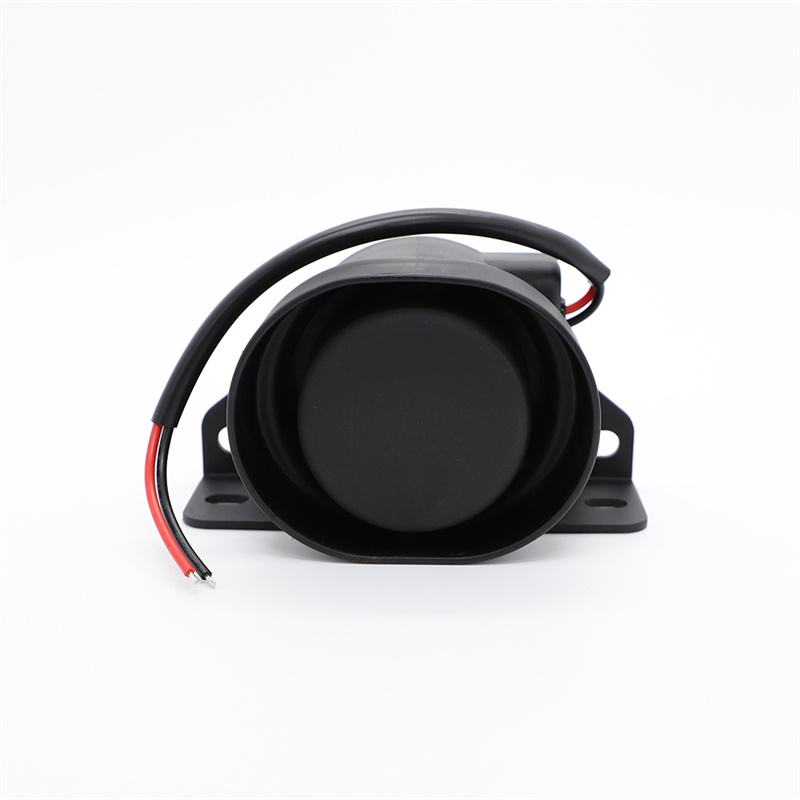
Understanding the core performance standards for a reversing alarm
The first step in selecting a reliable reversing alarm is to confirm that the product meets all relevant local, national and international safety standards for commercial vehicle auxiliary warning systems. A compliant reversing alarm will have clear documentation showing it has been tested for consistent sound output, resistance to electrical interference, and long-term performance under continuous operation, rather than being a generic untested audio device adapted for vehicle use. Different regions have specific regulations governing the maximum and minimum permitted sound levels for a reversing alarm, and ignoring these standards can lead to failed vehicle inspections, unexpected penalties and even legal liability if an accident occurs after a non-compliant reversing alarm is installed.
A high-quality reversing alarm should deliver a clearly defined, distinct warning tone that stands out from typical worksite background noise without blending into the general sound environment. Many low-cost reversing alarm models produce a vague, muffled tone that is easily mistaken for other site equipment noises, while a reliable reversing alarm uses a carefully engineered frequency range that human ears can quickly identify as an immediate safety warning, even when wearing standard workplace hearing protection. The sound projection pattern of a good reversing alarm is also carefully calibrated: it focuses the warning tone directly behind the vehicle where pedestrians and ground staff are most at risk, rather than wasting unnecessary sound energy projecting upwards, forwards or sideways where it only contributes to unwanted noise pollution.
Temperature and environmental tolerance are also non-negotiable performance factors for any reversing alarm intended for commercial vehicle use. Commercial vehicles operate in extreme conditions, from freezing winter environments where temperatures drop well below zero, to scorching summer days where vehicle exterior surfaces can reach extremely high temperatures. A reliable reversing alarm is built with industrial-grade components that will not crack, warp, lose sound clarity or stop functioning entirely after repeated exposure to these temperature extremes. A cheap reversing alarm installed on a delivery vehicle that fails during a cold morning shift leaves the driver completely without audible warning support, creating an immediate and avoidable safety hazard for everyone working around the vehicle.
Key durability and environmental resistance features of a reliable reversing alarm
Commercial vehicles regularly drive through muddy construction sites, heavy rain, deep puddles, dusty rural roads and dirty industrial yards, so every reversing alarm selected for fleet use must be built to withstand constant exposure to these harsh conditions. The most reliable reversing alarm models come with high ingress protection ratings that block water, dust, mud and small debris from entering the internal speaker and circuit components. A reversing alarm with a robust sealed housing will continue to operate normally even after being directly sprayed with high-pressure water during routine vehicle cleaning, while a low-quality unprotected reversing alarm will often short circuit or produce distorted audio after just one or two thorough washes.
Vibration resistance is another critical feature that separates a durable commercial-grade reversing alarm from a consumer-grade alternative. Large commercial vehicles produce constant, powerful engine and road vibration that travels through the entire vehicle chassis, and a poorly constructed reversing alarm with loose internal components will quickly develop rattling sounds, distorted warning tones or complete functional failure after only a few thousand kilometers of operation. A reliable reversing alarm is engineered with fully secured internal parts, heavy-duty mounting brackets and shock-absorbing elements that absorb constant chassis vibration, ensuring the unit maintains consistent clear audio performance for years of regular use. Fleet operators who skip this evaluation step often find themselves replacing a broken reversing alarm every few months, creating unnecessary maintenance work and unplanned safety gaps between the moment one unit fails and the next replacement is installed.
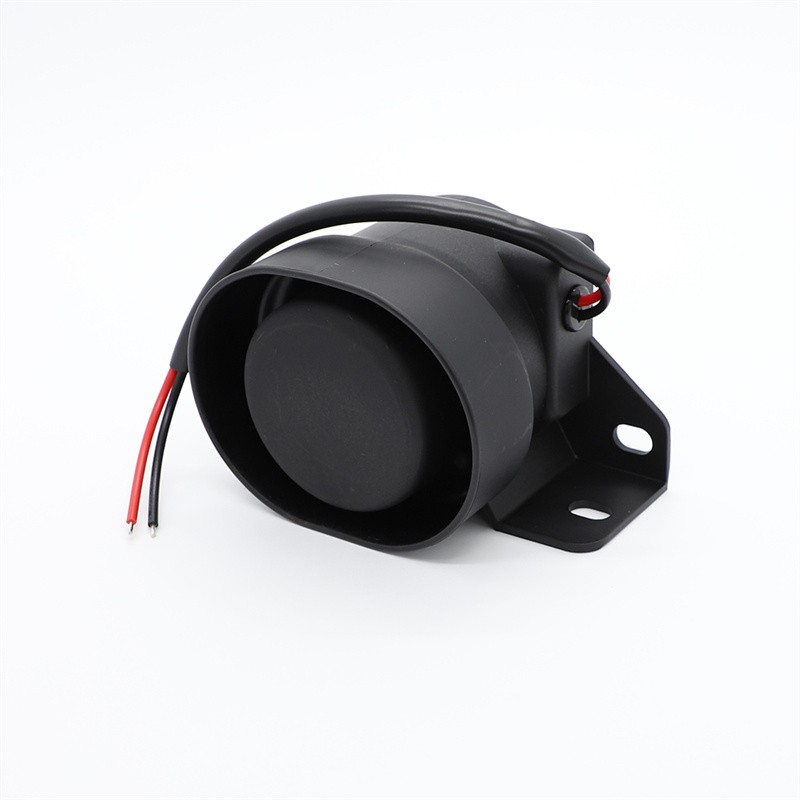
Corrosion resistance is equally important for any reversing alarm that will be mounted on the exterior of a commercial vehicle. Vehicles that operate in coastal areas with high salt air exposure, or on roads that are regularly treated with de-icing salt during winter, will cause unprotected metal components on a low-quality reversing alarm to rust rapidly. A reliable reversing alarm uses corrosion-resistant materials for its housing, mounting points and all external connections, preventing rust from weakening the mount, blocking sound output or causing the entire unit to break off the vehicle while it is in motion. This level of durability does not just extend the service life of each reversing alarm; it also reduces the total cost of ownership for the fleet by cutting down on frequent replacement parts and the labor hours required for repeated installations.
Matching reversing alarm performance to your specific operational environment
No single universal reversing alarm setting works perfectly for every type of commercial vehicle and every worksite, so the most reliable choice is often a reversing alarm that offers adjustable sound output levels to match different operating conditions. For fleets that split their operations between quiet urban residential delivery routes and loud, high-noise construction sites, an adjustable reversing alarm allows drivers or maintenance teams to set the sound level appropriately for each location. In a quiet residential area at early morning, the reversing alarm can be set to a lower, respectful level that still alerts nearby pedestrians without disturbing local residents, while on a busy construction site the same reversing alarm can be turned up to a higher level that cuts through the noise of heavy machinery and power tools. This flexibility eliminates the common problem where fleets are forced to choose between an overly loud reversing alarm that generates constant noise complaints, or a quiet reversing alarm that cannot be heard in high-risk industrial environments.
For fleets that regularly operate in mixed workspaces where multiple teams, delivery vehicles and pedestrian groups share the same area, a smart reversing alarm with progressive volume adjustment is an especially valuable choice. This type of reliable reversing alarm automatically adjusts its output based on the detected background noise level around the vehicle, ensuring the warning tone is always clearly audible without being unnecessarily disruptive. Many modern reversing alarm models also come with self-test functionality that automatically checks the speaker, circuit and sound output every time the vehicle is put into reverse, alerting the driver immediately if the reversing alarm is not functioning correctly. This feature removes the uncertainty that comes with manually checking the system every week, ensuring that a faulty reversing alarm is identified and replaced before it can contribute to an accident.
The size, weight and typical operating routes of your commercial vehicle should also directly influence the reversing alarm you select. A large 18-wheel heavy goods vehicle that regularly reverses in deep, crowded logistics yards needs a reversing alarm with a wider sound projection range that can be heard 10 to 15 meters behind the vehicle, while a smaller urban delivery van that operates on narrow city streets works best with a precisely calibrated reversing alarm that focuses its warning tone in the immediate danger zone without disturbing people far away from the vehicle. Taking the time to map out your most common operating environments, average background noise levels and typical reversing distances will help you select a reversing alarm that delivers exactly the right level of warning performance, rather than wasting money on overspecified features you will never use, or buying an underpowered reversing alarm that leaves critical safety gaps.
Installation, maintenance and long-term support for your reversing alarm
Even the highest quality, most carefully designed reversing alarm will not deliver its full safety benefits if it is installed incorrectly, so a reliable reversing alarm supplier should provide clear, detailed installation guidance tailored specifically for commercial vehicle applications. The correct mounting position for a reversing alarm plays a huge role in its overall performance: a reversing alarm mounted too high on the vehicle body will project sound over the heads of ground staff, while a reversing alarm mounted too close to the exhaust system will be damaged by constant heat exposure, and a reversing alarm installed facing the wrong direction will waste most of its sound output away from the danger zone behind the vehicle. A good supplier will also offer professional installation support or certified training for your in-house maintenance team, ensuring every reversing alarm across your entire fleet is mounted in the optimal position to deliver maximum warning effectiveness.
Long-term spare parts availability and after-sales technical support are also key factors that make a reversing alarm a reliable long-term investment. The worst situation a fleet manager can face is discovering that a faulty reversing alarm on a critical vehicle cannot be replaced quickly because the supplier no longer stocks that model, forcing the vehicle to sit idle for days while waiting for a compatible replacement. A trusted supplier that specializes in commercial vehicle safety systems will maintain consistent stock levels for every reversing alarm they supply, offer fast next-day delivery for urgent replacement orders, and provide clear technical support to help your team diagnose and resolve any minor performance issues without needing to remove and replace the entire unit. This level of ongoing support ensures that every reversing alarm in your fleet can be kept in perfect working order with minimal disruption to your daily operations.
Establishing a simple, regular inspection schedule for every reversing alarm across your fleet is the final step to maintaining consistent safety performance over time. During every routine vehicle service, maintenance staff should test the sound clarity, volume level, mounting security and wiring connections for each reversing alarm, to catch minor issues like loose wires, small housing cracks or slightly distorted audio before they develop into a complete system failure. Many fleets add a quick driver pre-shift check of the reversing alarm to their daily safety checklist, ensuring that any problem with the reversing alarm is reported immediately before the vehicle enters a worksite or public road. This combined approach of selecting a high-quality product, installing it correctly, supporting it with good supplier after-sales service, and maintaining it with regular inspections, creates a complete safety system that delivers reliable reversing alarm performance thousands of times over the entire service life of the vehicle.
Conclusion
Choosing a reliable reversing alarm for your commercial vehicle fleet is one of the most cost-effective, impactful safety decisions you can make to protect your staff, reduce operational risk and ensure full regulatory compliance. A properly selected, well-installed and regularly maintained reversing alarm does not just meet basic legal requirements; it creates a consistent, audible safety warning that prevents countless preventable reversing accidents every single day across every worksite and route your vehicles serve. By focusing on verified safety standards, heavy-duty environmental durability, performance matched to your unique operating conditions, and reliable long-term supplier support, you can avoid the common pitfalls of low-cost, low-quality reversing alarm products that fail prematurely, create noise pollution or leave dangerous safety gaps. Every reversing alarm you install represents a direct commitment to the safety of your drivers, your ground teams, the pedestrians who share the roads around your vehicles, and the overall operational resilience of your entire fleet. Taking the time to carefully evaluate every available option and select a truly reliable reversing alarm will deliver lasting safety benefits, lower long-term operating costs and build a stronger safety culture that extends to every part of your daily commercial vehicle operations.
FAQ
How much louder than the jobsite should the alarm be?
Aim for 10–15 dB(A) above ambient noise at the loudest realistic spot behind the vehicle. Yueda cites a 5 dB(A) minimum, and OSHA 1926.601(b)(4) requires the alarm to be audible above surrounding noise. Take a meter reading during peak activity and size from that number.
Should you pick a white-noise alarm or a tonal buzzer?
Match the tone to the work cycle. White-noise models such as the Yueda YS-B20 and YS-B30 series reduce listener fatigue where vehicles reverse constantly. Tonal buzzers suit short, intermittent reversing, where a sharp beep signals action fast. Neither type wins outright.
Can a spotter replace the reversing alarm?
OSHA 1926.601(b)(4) allows either a reverse signal alarm or an observer who signals when backing is safe. Many crews keep both, because workers grow deaf to constant beeping. Treat the alarm as your primary device and the spotter as reinforcement.
Does a backup camera make the alarm unnecessary?
No. A camera shows the visible area behind the vehicle. An audible alarm warns people who cannot see the vehicle. The two systems deliver different information, so keep the alarm as your primary safety device and add the camera for extra awareness.
What should you confirm before ordering a unit?
Check four things: the decibel rating against your site reading, the voltage range against the vehicle, the housing material against the duty cycle, and CE certification for your region. Confirm the mounting pattern too. A universal size such as the YS-B62 simplifies replacement across a mixed fleet.







View More(Total0)Comment lists