





What is required for audible alarms
 Aug 31, 2026|
 View:279
Picture a busy construction site. A loader reverses toward you. Dust and noise fill the air. Would you hear its warning signal above the machinery? Audible alarms serve as critical safety devices. They emit clear, attention-grabbing sounds. These sounds alert nearby workers and prevent accidents.
This article explains the essential requirements for effective audible alarms. You will learn about working principles, types, real-world applications, and selection criteria. By the end, you will have a practical checklist. This checklist helps you evaluate and choose the right audible alarms for your needs. Remember, effectiveness means more than just volume. It involves clarity, compliance, and context.
Key Takeaways
Audible alarms must be loud enough to overcome background noise. Aim for at least 10-15 dB above ambient levels.
Choose alarms with a distinct tone. This tone should not be used for any other purpose. Workers will recognize it faster.
Follow safety rules. OSHA requires audible alarms on reversing vehicles. Visual warnings cannot replace them without special permission.
Match the alarm to your environment. Consider indoor vs. outdoor, noise levels, and weather. Use weatherproof models for outdoor use.
Select alarms that fit your vehicle's voltage and mounting needs. Custom voice prompts can improve safety on diverse job sites.
How Audible Alarms Work
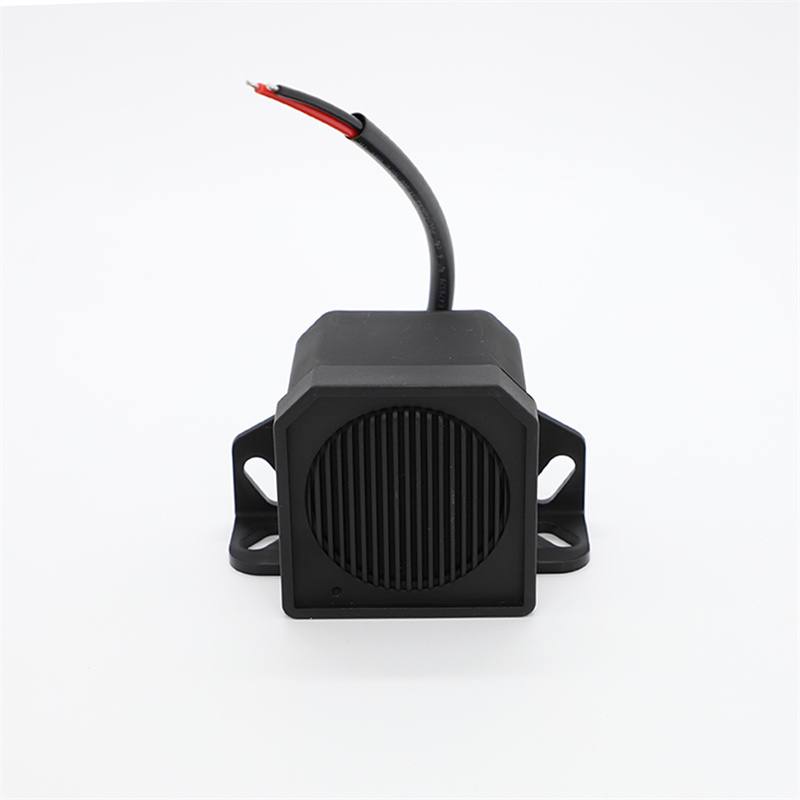
Every audible alarm operates on a simple principle: it converts electrical energy into sound waves. When you activate the alarm, electricity flows through an internal circuit. This circuit drives a piezoelectric element or an electromagnetic coil. The element vibrates rapidly, creating pressure waves in the air. Those waves travel outward as sound. The result is a distinct, recognizable signal that cuts through background noise.
Sound Generation and Projection
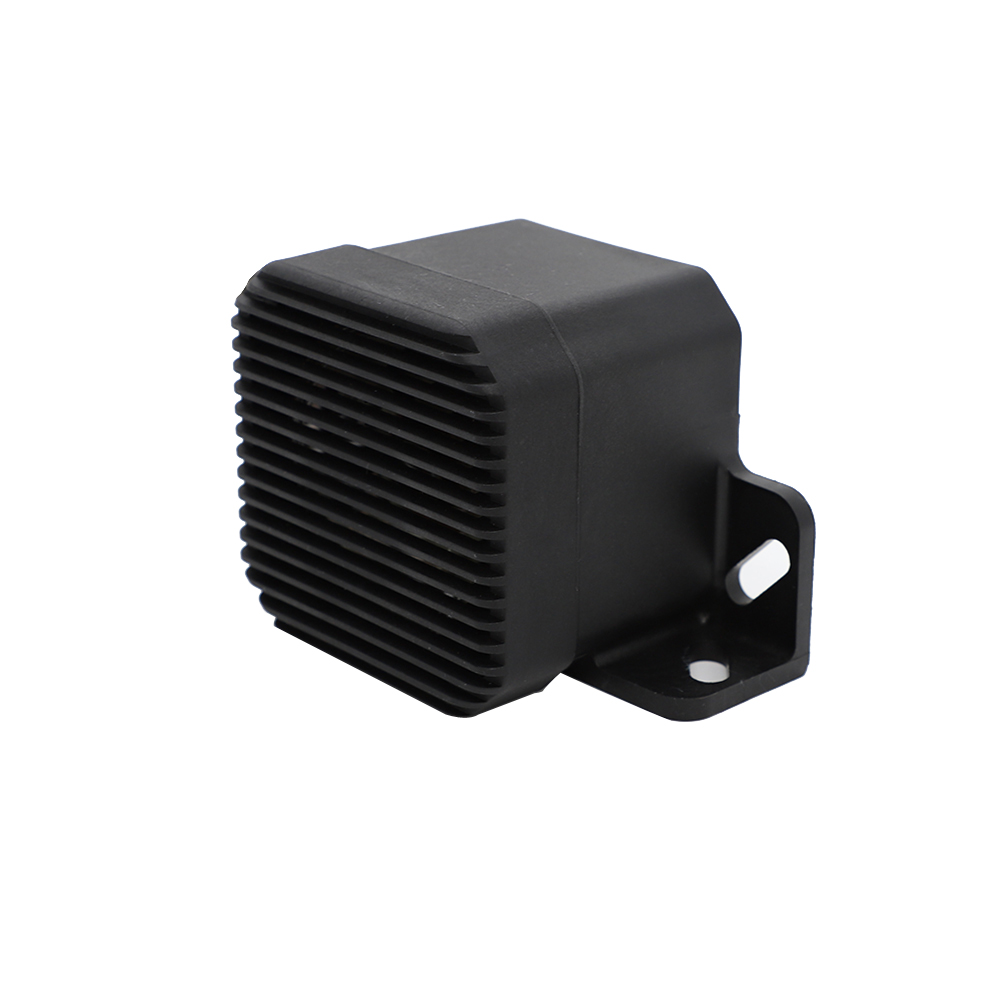
The design of the alarm's internal cavity plays a crucial role in sound quality. Yueda engineers use a unique cavity shape that shapes the sound waves as they exit. This design produces a more pleasant tone compared to standard alarms. You get a warning that is easier on the ears without sacrificing loudness. The output reaches up to 97 decibels, which ensures the signal stands out even on noisy job sites.
Sound projection matters just as much as generation. The alarm's housing directs sound waves in a specific pattern. This pattern ensures the warning reaches workers in the immediate vicinity. You want the sound to cover the danger zone around the vehicle. A well-designed alarm projects sound evenly, so no blind spots exist where a worker might miss the warning.
Power and Voltage Requirements
Voltage compatibility determines where you can install an alarm. Most Yueda models operate on a wide 12–24V DC range. This flexibility makes them suitable for various vehicles and machinery. However, different equipment uses different electrical systems. You need to match the alarm to your vehicle's voltage to prevent damage.
Vehicle Type | System Voltage | Alarm Compatibility Requirement |
|---|---|---|
Smaller utility trucks | 12V or 24V | Standard voltage input |
Heavy electric material handling machinery | 48V, 80V, or higher | Wide-voltage input or customized power management boards to prevent damage from voltage spikes |
Power consumption affects how the alarm integrates with your vehicle's electrical system. The table below shows typical specifications for 12–24V alarms with high output.
Parameter | Value |
|---|---|
Voltage Range | 12–24 V DC (also 12–48 V) |
Power Consumption | 1.2–12 W |
Audible Output | 77–102 dB (includes 97 dB) |
Another common configuration draws 0.5 A of current. At 9V, it consumes 4.5W; at 32V, it consumes 16W. This range shows how power scales with voltage. You must verify your vehicle's electrical capacity before installation. A proper match ensures reliable operation and prevents electrical issues.
Key Requirements for Audible Alarms
Volume and Distinctiveness Standards
The primary requirement for any warning device is simple: people must hear it. A general baseline exists for indoor fire alarms at 65 dB(A) SPL. However, industrial environments demand much more. Background noise creates a psychoacoustic effect called masking. A louder ambient sound shifts your hearing threshold upward. This shift effectively drowns out quieter warning signals. As ambient noise increases, the alarm's sound pressure level must rise proportionally to overcome this threshold shift.
You need to understand how much louder your alarm must be. The key principle states that an alarm should sit at least 5 dB(A) above ambient noise. For recommended safety margins, you should aim for 10–15 dB(A) above ambient levels. Consider a typical construction site with ambient noise around 85 dB(A). A standard alarm would fail to penetrate that din. Yueda models deliver up to 97 dB output, giving you the margin needed to cut through heavy machinery noise.
NFPA 72 requires fire alarm sound levels to be at least 15 dB above the average ambient sound level, or at least 5 dB above the maximum ambient sound level lasting 60 seconds, whichever is greater. For noisy industrial areas, this can exceed 85–90 dB(A).
The table below illustrates how ambient noise affects your coverage requirements:
Ambient Noise | Sounder Output | Effective Coverage |
|---|---|---|
65 dB(A) | 100 dB(A) @ 1m | ~105 ft (one sounder covers 30m × 20m room) |
85 dB(A) | 120 dB(A) @ 1m | Same coverage with one sounder (20 dB increase gives 10× distance) |
Volume alone does not guarantee effectiveness. Your alarm must also produce a distinctive sound. Regulations require that the warning tone not be used for any other purpose. This distinctiveness prevents confusion. Workers learn to recognize the specific pattern and frequency. They respond faster when they know exactly what the sound means. A generic buzzer that blends with other equipment noises creates danger. You need a signal that stands apart from every other sound on site.
Regulatory Compliance and Safety
Compliance with safety standards is non-negotiable. You cannot install just any audible device and call it compliant. OSHA sets clear rules for construction vehicles. The standard 1926.601(b)(4) states that no employer shall use any motor vehicle with an obstructed rear view unless the vehicle has a reverse signal alarm audible above the surrounding noise level. Alternatively, you may back up only when an observer signals that it is safe.
OSHA also restricts your substitution options. A strobe light or visual warning cannot replace an audible backup alarm unless you receive a formal safety variance. You might consider alternative technologies like broad-band white noise alarms or radar sensors. These options must still provide a warning that is effective and timely enough for workers to avoid being struck.
Requirement Category | OSHA Specification |
|---|---|
Volume Levels | Audible alarms must be distinct and loud enough to be distinguishable above the surrounding noise level of the job site. |
Visual Substitutes | A strobe light or visual warning cannot be used as a substitute for an audible backup alarm unless a formal safety variance is granted. |
Alternative Technologies | Employers can use technology like broad-band 'white noise' alarms or radar/ultrasonic proximity sensors, but they must still provide a warning that is effective and timely enough for workers to avoid being struck. |
International standards add another layer of requirements. ISO 3691-4 explicitly includes warning devices and signals as a core requirement for driverless industrial trucks. This standard mandates that audible alerts notify nearby workers of vehicle presence and movement. It also specifies minimum decibel thresholds suitable for industrial environments. When you select audible alarms for your fleet, verify they meet these international benchmarks. Compliance protects your workers and shields your organization from liability. Every safety system you deploy must meet these regulatory standards without exception.
Applications in Industrial and Construction Settings
Alerts for Reversing Vehicles and Machinery
Construction sites present constant danger. Loaders, excavators, and cranes move in tight spaces. Operators often have limited visibility behind their machines. You need a reliable warning system to protect workers on foot. Audible alarms serve this exact purpose. They announce vehicle movement before anyone sees it coming.
Consider a loader backing toward a dump truck. The operator cannot see the ground directly behind the cab. A worker might be crouching there, checking a tire. The alarm sounds the moment the loader shifts into reverse. That worker hears the distinct tone and steps aside. The accident never happens. This scenario plays out thousands of times daily on job sites worldwide.
The sound pattern matters as much as the volume. A reversing alarm must be instantly recognizable. Workers learn to associate that specific tone with danger. They respond without thinking. Yueda offers models with voice prompts for reversing and turning. These spoken warnings add clarity beyond a simple beep. A voice saying "Caution, vehicle reversing" leaves no room for confusion.
Integration with Broader Safety Systems
Modern alarms do not work alone. They connect to detection sensors, manual switches, or automatic control systems. You can link the alarm to the vehicle's gear shift. The alarm activates automatically when the operator selects reverse. This hands-free operation ensures consistent warnings. No one forgets to sound the alarm because the system handles it.
Some job sites use proximity sensors to trigger warnings. These sensors detect people or objects near the vehicle. The alarm sounds only when a real threat exists. This approach reduces noise pollution while maintaining safety. Workers do not become desensitized to constant beeping. They pay attention when the alarm actually sounds.
Voice prompt alarms enhance communication on diverse crews. Construction teams often include workers who speak different languages. Yueda offers models with Spanish and Korean voice options. A worker who understands the warning responds faster. Clear communication prevents misunderstandings that lead to injuries. You can customize voice messages to match your specific operational needs.
The YS-BQ and YS-B50 models combine sound and light for maximum visibility. These dual-signal alarms work well in extremely noisy environments. Workers who cannot hear the tone still see the flashing light. This redundancy ensures no one misses the warning. Every layer of protection reduces risk on your job site.
Selecting the Right Audible Alarms
Choosing the correct alarm for your operation requires more than picking the loudest option. You must match the device to your specific environment, application, and crew. The right choice protects workers without creating unnecessary noise pollution. The wrong choice creates a hazard that no one takes seriously.
Evaluating Sound and Visual Combinations
Start by assessing your work environment. Indoor and outdoor settings demand different approaches. The table below shows how key factors shift between these two contexts.
Factor | Indoor Consideration | Outdoor Consideration |
|---|---|---|
Installation Height | Lower, but must be above obstructions; often mounted on walls or ceilings | 40–60 ft minimum for effective coverage; roof or high mast recommended |
Wind Conditions | Negligible impact | Wind can push sound away; reduces audible range in opposite direction |
Ambient Noise | Machinery, compressors, traffic inside facility can reduce perceived loudness | Wind, traffic, other outdoor noise sources affect clarity |
Physical Obstructions | Walls, doors, metal structures, conveyors block sound; cannot rely on single siren | Buildings, terrain, etc. can block; need multiple units |
Alarm Type | Hooters (high-pitch, directional, easily blocked) – suitable for indoor local alerts | Motor sirens (low-pitch, omnidirectional, long-range) – best for outdoor coverage |
Tone | High-pitch for short travel | Low-pitch for long travel |
You also need to decide between standard buzzers, voice-prompt alarms, and combined sound-and-light models. Standard buzzers work well for simple reversing alerts. They produce a consistent tone that workers quickly recognize. Voice-prompt alarms add spoken messages like "Caution, vehicle reversing." These models reduce confusion on sites with diverse crews. Yueda offers Spanish and Korean voice options to match your workforce.
Combined sound-and-light models, such as the YS-BQ and YS-B50, provide maximum visibility. These devices flash a bright light while emitting the audible warning. They excel in extremely noisy environments where sound alone may not penetrate. Workers who cannot hear the tone still see the flashing light. This redundancy ensures no one misses the warning. For outdoor installations, you must also consider weatherproofing. The table below outlines minimum protection levels for different conditions.
Environmental Condition | Recommended IP Rating Requirement |
|---|---|
Dusty or dirty environments | First digit of 5 or 6 (dust-protected or dust-tight) |
Outdoor exposure with rain or spray | IP54, IP65, or IP66 |
Strong water jets or washdown | IP66 or higher |
Temporary immersion risk | IP67 |
IP65 rating is often considered the minimum for industrial use, ensuring the device is completely sealed against dust and can be sprayed with low-pressure water jets during cleaning. For field professionals (construction workers, utility technicians), an IP67 rating is often a key requirement, guaranteeing the device is dust-tight and can survive being dropped in a puddle, muddy trench, or snowbank for up to 30 minutes. In addition to IP ratings, devices for these fields are often tested against military standards like MIL-STD-810, which covers shock from drops, vibration, extreme temperatures, and high altitudes—factors that IP ratings do not cover.
Customization and Installation Ease
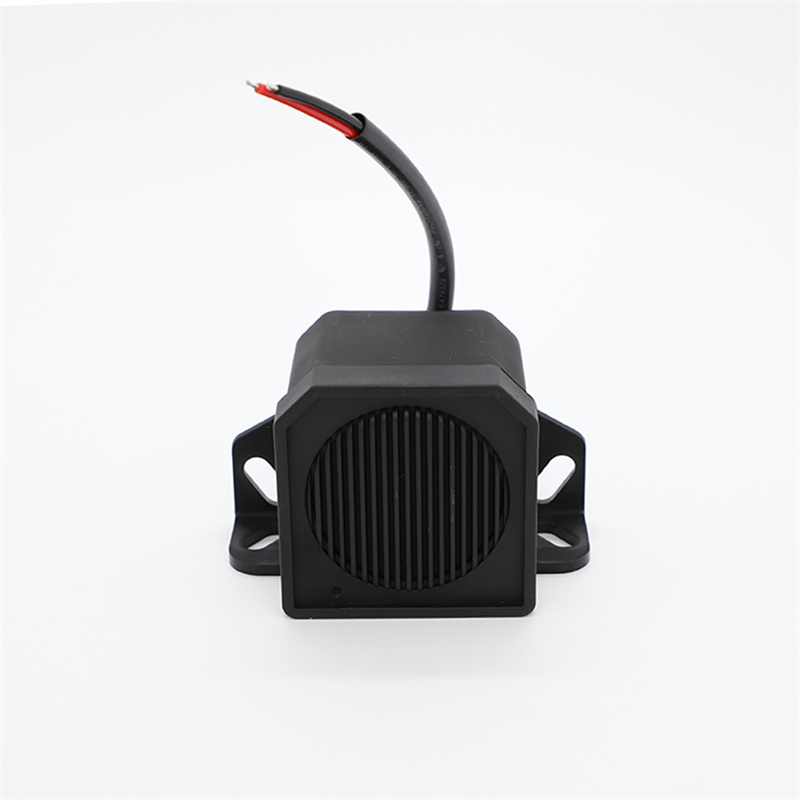
Practical requirements extend beyond sound output. You need an alarm that fits your vehicle's electrical system. Most Yueda models operate on a 12–24V DC range. Some equipment uses higher voltages, so verify compatibility before purchase. You also need to consider mounting options. Surface, wall, pole, tube, or crane structure mounts each suit different applications. Choose a model that matches your installation point.
Customization matters more than you might expect. Different job sites require different warning messages. You can order Yueda alarms with custom voice prompts tailored to your operations. This flexibility ensures the warning communicates exactly what workers need to know. A clear, specific message prevents confusion and speeds response times.
Installation should not require specialized tools or extensive rewiring. Look for alarms with straightforward mounting brackets and simple wiring connections. This ease of installation reduces downtime and ensures the system operates correctly from day one. You also want a device that remains reliable over years of harsh use. Durable construction, proper sealing, and corrosion-resistant materials extend the lifespan of your investment.
Every audible alarm you select must comply with relevant safety regulations. OSHA standards and international benchmarks like ISO 3691-4 set clear expectations. Verify that your chosen model meets these requirements before deployment. Compliance protects your workers and shields your organization from liability. A reliable, durable, compliant alarm delivers long-term effectiveness. When you evaluate options, consider the total cost of ownership, not just the purchase price. A quality alarm that lasts five years outperforms a cheap unit that fails in six months. Your workers deserve protection that works every single day.
You have traveled from understanding how audible alarms convert electrical energy into sound to recognizing the critical requirements of volume, distinctiveness, and regulatory compliance. The ultimate requirement remains simple: preventing accidents and saving lives. You achieve this by selecting the right alarm for your specific application and environment.
Modern solutions, like those from Yueda, meet these demands with multi-language voice prompts and combined sound-and-light alerts. The future points toward smarter systems. IoT-enabled alarms create safety networks through remote monitoring and data analytics. AI integration enables predictive maintenance and adaptive alerting, reducing false alarms. These innovations make warnings clearer and more informative. Use this guide as your benchmark when evaluating your safety equipment.
FAQ
What is the minimum sound level an audible alarm must produce?
Indoor fire alarm standards require at least 65 dB(A). Industrial environments demand higher output. Yueda models deliver up to 97 dB, ensuring the alarm cuts through heavy machinery noise.
Can I use a strobe light instead of an audible alarm?
OSHA prohibits using a visual alarm as a substitute for an audible backup alarm. You must obtain a formal safety variance to replace the sound with a light.
What voltage do most audible alarms require?
Most Yueda models operate on a 12–24V DC range. This makes them compatible with many vehicles and machinery. Always verify your equipment's voltage before installation.
Can I customize the voice message on my alarm?
Yes, Yueda offers models with custom voice prompts. You can order messages for reversing, turning, or general safety warnings. This feature improves communication on diverse job sites.





View More(Total0)Comment lists